
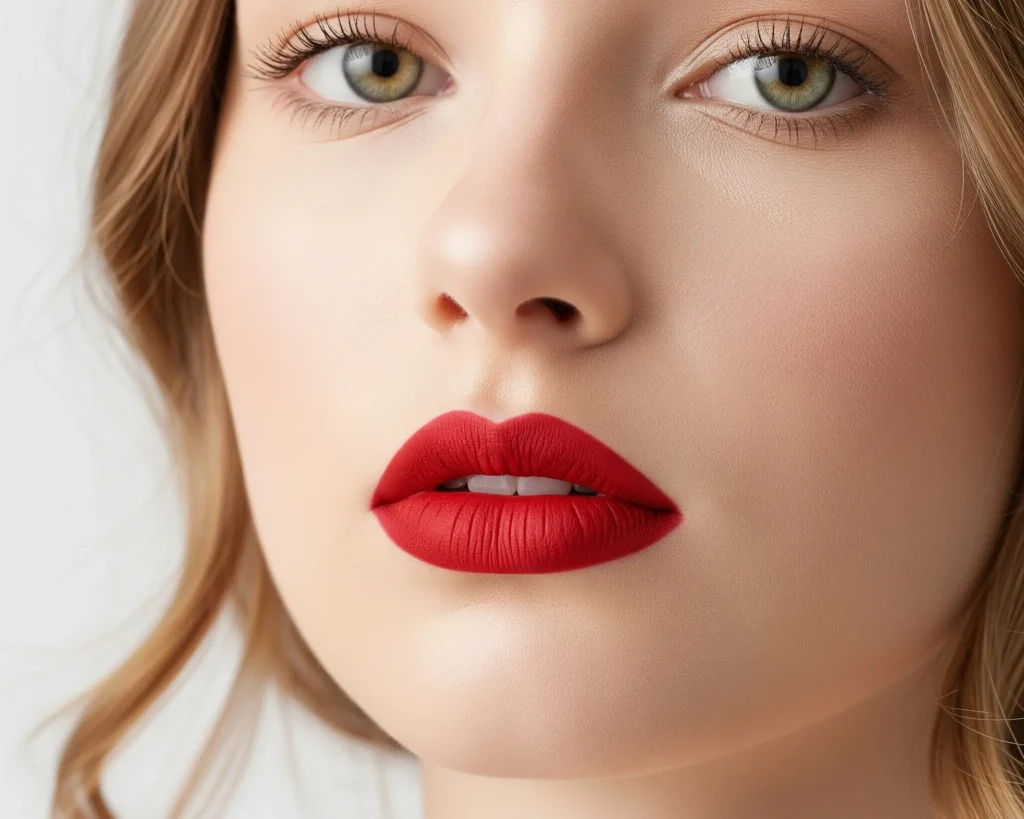
We all wear it, carry it in our bags, and touch it up throughout the day—but have you ever stopped to wonder how lipstick came to be such a beauty essential? The history of lipstick is as rich and colorful as the shades we love today. From ancient queens to modern icons, lipstick has been a powerful symbol of beauty, confidence, and identity. Let’s take a fascinating journey back in time to discover how women throughout the ages introduced and embraced this timeless cosmetic. Dive in and explore the history of lipstick like never before!
You are sitting in a bus. It is raining outside. A young woman is sitting opposite you. She is applying blush on her cheeks with her finger. The soft glow catches your attention. Do you remember your college days in that glow? From the moment you first went to the beauty counter and picked up a lip balm, to the moment you booked online and got your favorite branded cosmetic and applied it – it all comes back to you.
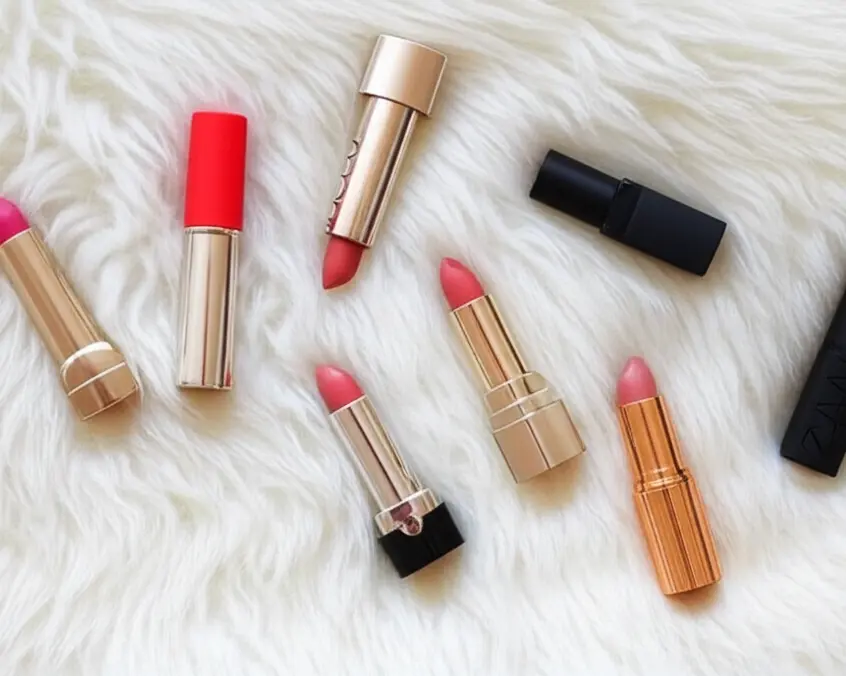
These days, you’re fascinated by the many beauty tutorials on Instagram Reels, but there are very few that accurately and honestly tell you who uses what in real life.
A friend takes something out of her purse. Your eyes focus on the lipstick in the purse, and you immediately become curious and ask what brand it is. However, without asking, you open your mobile and start searching online for the best brand.
It’s important to note how deeply the influence of beauty style is all around us. Makeup is not a quick fix. It’s a personal expression, an art form that takes shape as inspiration from others.
When you put on lipstick today, you’re not just adding color to your lips; you’re incorporating every step of five thousand years of female history into yourself. So, let’s learn about that history here.
About five thousand years ago, women in Mesopotamia, ancient India, Persia, Egypt, and South Asia painted their lips red. This lipstick was part of a woman’s expression of beauty, and it was a symbol of feminine power.
Sumerian men and women used to decorate their faces with crushed gemstones, which is the origin of today’s lipstick. Not only is this surprising, but also amusing. Cleopatra used to make her lip color with crushed ants and fish scales.
Some ancient lipsticks contained toxic chemicals. There are historical accounts of the Egyptians using dangerous combinations, such as the “Kiss of Death”.
In 16th-century England, many women began to paint their lips red. It became a fashion statement, and Queen Elizabeth-I pioneered this new style. Her white face and red lips were both political and fashionable.
Lipstick has a turbulent history. From the Middle Ages to the late 19th century, cosmetics were considered taboo for ordinary women. The Catholic Church considered makeup to be the work of the devil. In 1770, the British Parliament passed a law that made it possible to annul a marriage if a woman wore cosmetics. The use of lipstick was mainly limited to actresses and prostitutes. However, lipstick came into existence in the 19th century through the Guerlain company. At that time, carmine dye was made from insects, and lipstick was sold in weighted paper, tinted papers, or in pots. Lipstick first appeared in the American Sears & Roebuck catalog, according to an article on the beauty website Tavoos Spa.
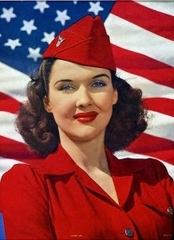
Lipstick took on its truly revolutionary form in the 1900s. It became a symbol of women’s liberation, not just decoration. Feminist activists wore red lipstick, using it as a symbol of their courage and defiance. Guerlain introduced the first stick rouge, followed by Maurice Levy’s metal push-up tube and James Bruce Mason Jr.’s swivel lipstick tube in 1923. Lipstick became widely used. During the war years of the 1940s, women in the Navy were using lipstick to match their uniforms. With the increasing demand, plastic tubes were used instead of metal, according to Julie Hewett website. By that time, about 98% of women were wearing lipstick.
ALSO READ: Ashtanga Hridaya Secrets: The time lapse herb for Dewy skin
In the 1950s, American chemist Hazel Bishop developed a long-lasting, non-smearing lipstick. This innovation gained popularity through icons like Marilyn Monroe and Elizabeth Taylor, whose bold red lips became a standard in fashion photography of the era.
In the 1960s, rock bands like the Ronettes and the Shirelles introduced white lipstick into the scene, but the majority of the female population preferred darker or more colorful tones by that time.
By the 1990s, lipstick began to evolve wax-free, semi-permanent liquid formulas entered the market and quickly became leaders.
By 2015–16, liquid lipsticks like those from Anastasia Beverly Hills had taken over the fashion world. These new styles, which applied like a gloss and dried to a matte finish, became favorites of a new generation, according to writer Marji Soofi.
Today, lipsticks come in many forms like balm, gloss, pencil, liner, and stain. These colors on the lips are not just decoration; they are symbols of strength and independence. For most women today, lipstick is part of their daily routine, a fashion and beauty tool.


