
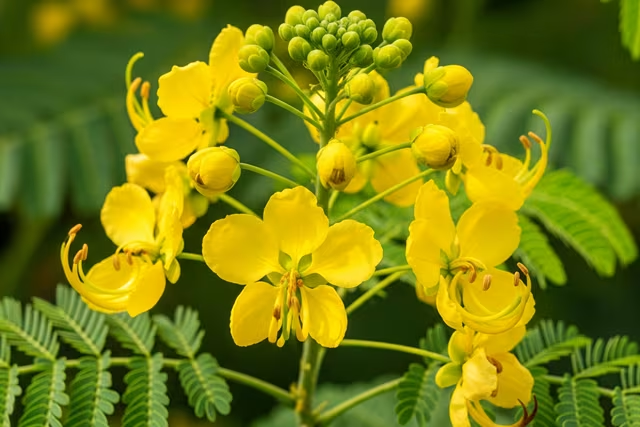
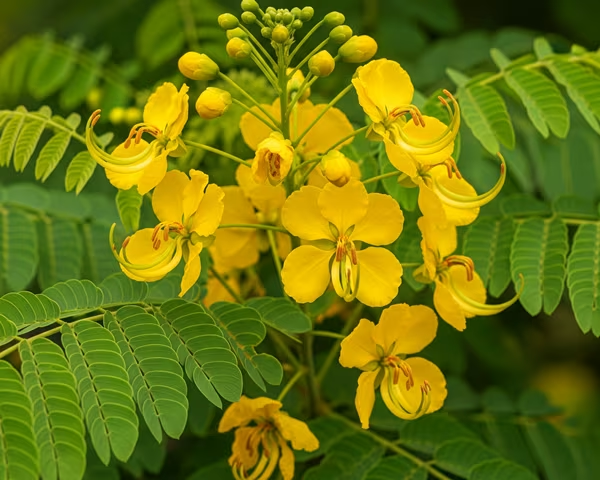
Cassia auriculata, commonly known as Tanner’s Cassia or Avaram Senna, is a well-known medicinal shrub found in India and Sri Lanka. Deeply rooted in Ayurveda and Siddha medicine, it has been used for centuries to treat a wide range of health conditions. Let’s explore the powerful medicinal benefits of Avartaki (Cassia auriculata).
Medicinal Benefits of Avartaki: Traditional and Modern Uses
Avartaki, the Sanskrit name for Cassia auriculata, is widely used in traditional medicine, especially for skincare and digestive health. and even women’s wellness. It is used as an ingredient in tea blends, face packs, and natural supplements. Its dried flowers are often brewed into herbal tea, while leaf extracts are included in topical applications. Aside from medicinal uses, it is also valued in green manure farming and natural dye production, showing its multipurpose nature.
Rich Phytochemical Composition of Cassia auriculata
The healing power of Cassia auriculata lies in its chemical richness. Research confirms that its leaves contain flavonoids, saponins, tannins, alkaloids, steroids, and proteins. These compounds are known for their biological activities, especially in boosting immunity and fighting harmful microbes. For example, flavonoids have strong antioxidant effects, while saponins are known to improve immune response and even fight infections. A published study in the Indian Journal of Pharmaceutical Sciences highlighted the plant’s antibacterial performance, particularly its ability to inhibit growth in bacteria like E. coli and Staphylococcus aureus.
| Language | Names |
|---|---|
| Sanskrit | Avartaki, Charmarang, Pitpuspha |
| English | Tanner’s Cassia, Mature Tea Tree |
| Hindi | Taroda, Tarval, Tarwar |
| Kannada | Tangedu, Taravadagida |
| Malayalam | Aviram, Avara, Jimute |
| Tamil | Avarai, Avirae |
Scientifically-Backed Health Benefits
Kanchanapami offers a broad range of therapeutic benefits. One of its most widely known effects is its ability to regulate blood sugar levels. It works as a natural agent for managing type 2 diabetes and helps control glucose without the side effects often associated with synthetic medications .
Its antibacterial properties are also impressive. The plant’s methanol and chloroform extracts showed strong activity against harmful bacteria such as Bacillus cereus, Klebsiella pneumoniae, and Proteus mirabilis. These findings make it a natural remedy for common infections and skin conditions like acne and rashes .
In traditional use, the leaves are applied as face packs to treat eczema, oily skin, and inflammation. Its cleansing and cooling effect makes it ideal for natural skincare.
Kanchanapami also supports liver health, helping to detoxify the body and protect liver cells from toxin-induced damage. It can improve digestion and is used in herbal teas to enhance metabolism, reduce bloating, and aid in weight loss naturally.
As a mild diuretic, it helps with urinary tract health, flushing out toxins and reducing water retention. It has even been used traditionally to treat eye infections and maintain clear vision, usually through herbal eye washes.
Among the medicinal benefits of Avartaki, Kanchanapami is especially helpful for women, as it helps ease menstrual pain and regulate the cycle. Its calming and anti-inflammatory properties make it a key ingredient in many female wellness formulations.
Lastly, its richness in antioxidants and antimicrobial agents gives the immune system a natural boost. These compounds act as protectors, supporting the body’s fight against free radicals and pathogens.
Conclusion: Medicinal Benefits of Avartaki
Cassia auriculata, or Avartaki, is more than just a traditional herb. It offers powerful, natural support for blood sugar regulation, skin care, liver detox, urinary wellness, and immune health. With scientific studies backing up its traditional uses, it’s clear this plant has much to offer in modern herbal therapy.
Whether taken as tea, applied topically, or used as a supplement, Kanchanapami remains a safe and affordable choice for holistic well-being. As research continues to unfold, its role in natural medicine is only set to grow stronger.
🔗 Source: Indian Journal of Pharmaceutical Sciences – NCBI
Disclaimer:
The information provided in this article is for educational and informational purposes only. It is not intended to diagnose, treat, cure, or prevent any disease. Always consult with a qualified healthcare professional before starting any new herbal or health regimen. While traditional knowledge and scientific research support many of the benefits mentioned, individual results may vary. We encourage informed choices and responsible wellness practices.


