
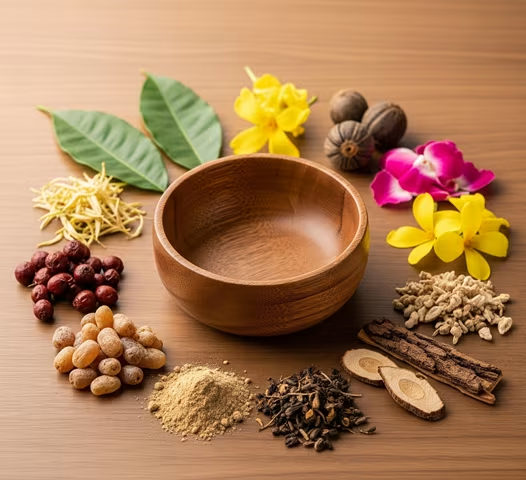
Long before modern beauty brands, ancient Indian Skincare Formula from Rati-Rahasya described natural, plant based skincare secrets using the healing power of herbs. This classical Sanskrit work offers more than poetry and romance — it preserves time-tested beauty formulas made from leaves, roots, flowers, and resins. These Ayurvedic recipes were crafted not just to enhance beauty, but to restore balance and radiance from within.
Let’s explore what ancient Indian texts in Sanskrit revealed — and how they formulated these timeless secrets..
Collected Resources: Skincare Formula from Rati-Rahasya
A beautiful ancient recipe for skincare appears in the Rati-Rahasya (an Indian Sanskrit text on beauty and love), written by the poet Kokkoka. In Chapter 15 (verses 100–101), the author describes a herbal paste made from powerful plants. Here’s the traditional verse, translated:
“If equal quantities of ripe Vata leaves, Kanchanapami, Madhuka, Priyangii, Padma, Sahadevi, Harichandana, Laksha (Lac), Vahlika, and Lodhra are mixed with water and made into a paste and applied to the faces of amorous women, their lotus-like faces become as resplendent as the autumnal moon.”

— Rati-Rahasya, Chapter 15: Verses 100–101, pp. 242–243. (Transl. S.C. Upadhyaya, 1965)
Things You’ll Need for the Skincare Formula from Rati-Rahasya
| Ingredient | Botanical Name | Part Used | Quantity |
| Vata Leaves | Ficus benghalensis | Fresh or dried leaves | 1 tbsp (fresh or dried) |
| Kanchanaparni | Bauhinia variegata | Bark | 1 tsp (powdered) |
| Madhuka (Licorice root) | Liquorice | Root & stolon | 1 tsp (powdered) |
| Priyangu | Prunus mahaleb | Seeds | ½ tsp (powdered) |
| Padma (Lotus petals) | Nelumbo nucifera | Petals | 1 tbsp (fresh or dried) |
| Sahadevi | Vernonia cinerea | Entire plant | 1 tsp (powdered) |
| Harichandana | Santalum album (Yellow Sandalwood) | Heartwood | ½ tsp (powdered) |
| Laksha | Lac resin | Resin | ½ tsp (powdered) |
| Vahlika (Saffron) | Crocus sativus | Stigma with style-top | A few strands (5–6) |
| Lodhra | Symplocos racemosa | Bark | 1 tsp (powdered) |
Optional: Clean water or rose water for mixing.
You can easily find these herbs in powdered form at your local Ayurvedic store. Just ask using their regional names, like Padma is called Kamal in Hindi.
If you’re not sure about a plant’s name, just click the linked text (it usually opens Wikipedia) to see pictures and identify it easily. Or simply search online using the botanical name + “powder”—for example, Ficus benghalensis powder.
You’ll find it on Amazon, Flipkart, or other sites. Just make sure to pick products with good ratings and trusted reviews.
Get Started: How to Make and Use
- Grind or powder all dried herbs as needed
- Mix all ingredients in a clean bowl.
- Add rose water, raw milk, to make a smooth paste.
- Let the saffron soak in a few drops of warm water or milk for 5–10 minutes before adding to the mix.
- Mix well into a soft, spreadable consistency.
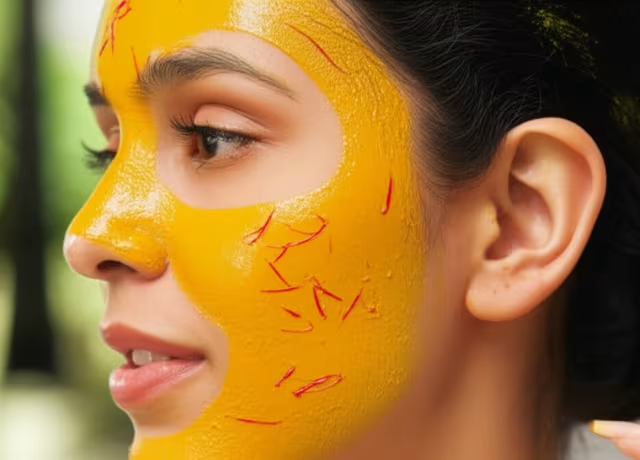
- Apply the herbal paste evenly across your face and neck. Make sure to avoid the eyes and lips.
- Leave for 15–20 minutes.
- Wash off gently with lukewarm water.
For best results, use 2–3 times a week, preferably in the evening.
Superpower Explained: Why These Ingredients Work
| Ingredient | What It Does |
|---|---|
| Vata leaves | Soothes inflammation and tightens skin |
| Kanchanaparni | Detoxifying, tightens skin, reduces pigmentation and puffiness. |
| Madhuka | Brightens skin, fades dark spots, strong anti-inflammatory and antibacterial properties |
| Priyangu | soothe, heal, and protect the skin. |
| Padma (Lotus) | Hydrating, anti-aging, improves elasticity, brings glow and softness. |
| Sahadevi | Clears blemishes and supports even tone |
| Harichandana | Cools the skin and prevents tanning |
| Laksha (Lac) | Acts as a gentle exfoliant and healer |
| Vahlika | Detoxifies and adds natural fragrance |
| Lodhra | Tightens pores and gives a youthful glow |
Disclaimer
This Skincare Formula from Rati-Rahasya formulation is shared based on classical Ayurvedic texts and trusted botanical knowledge. All ingredients mentioned are traditionally used in skincare and are generally considered safe. However, everyone’s skin is unique. If you have very sensitive skin or known allergies, we recommend doing a patch test first. In case of irritation, rinse immediately and consult a qualified dermatologist.


